Why Mesh Copper Matters in Touch FPC Design
In industrial touch systems, adding a mesh copper structure to the touch FPC can be an effective system-level design strategy for improving electromagnetic compatibility and supporting more stable signal behavior. When designed correctly, mesh copper can help reduce external interference coupling, improve ground reference stability, and support better overall robustness in compact, high-noise environments. This article explains where mesh copper is useful, why it matters, and what design trade-offs must be controlled in real engineering projects.
What Is Mesh Copper in a Touch FPC?
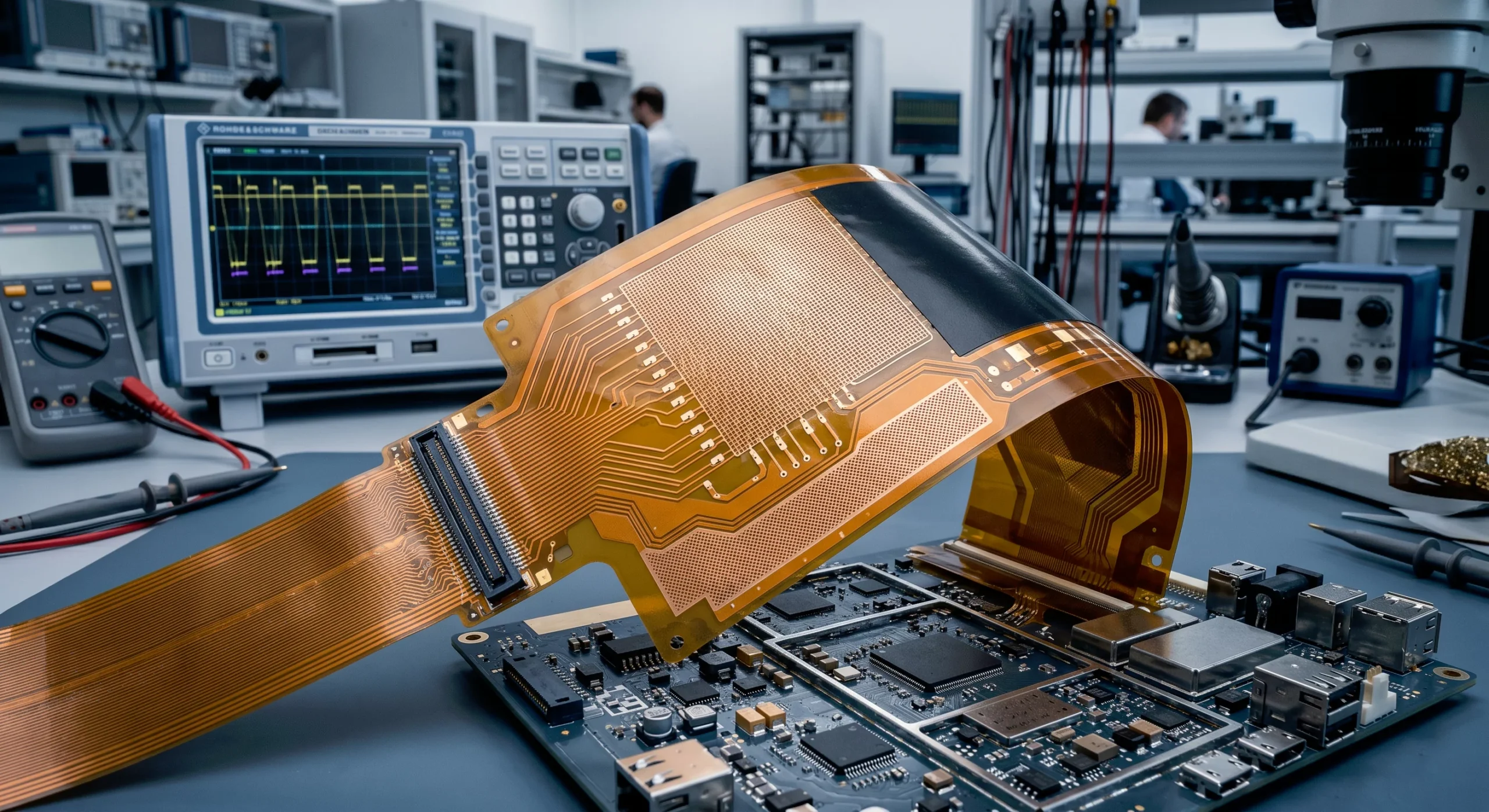
In touch FPC design, mesh copper refers to a patterned copper layer arranged in a grid-like structure rather than as a solid plane. Its purpose is usually to support electromagnetic shielding, improve reference stability, and fit into products where space, flexibility, and integration constraints make a full shielding structure difficult to implement.
In industrial projects, mesh copper is not simply an extra metal layer. It is a design feature that must balance EMC, signal integrity, mechanical flexibility, assembly fit, and cost.
Typical Application Scenarios
Mesh copper becomes more relevant in systems where the touch FPC operates near noise sources, inside compact assemblies, or with higher signal sensitivity requirements.
High-Noise Industrial Environments
Automation lines, power control cabinets, and industrial equipment often create strong electromagnetic interference that can affect touch signal stability.
High-Speed or Noise-Sensitive Interfaces
Touch systems with complex controller behavior or noise-sensitive routing may benefit from a more controlled shielding and grounding structure.
Compact Product Architecture
In thin or space-limited products, integrating shielding behavior into the FPC itself can be more practical than adding separate layers elsewhere.
Large-Size and High-Precision Touch Systems
Large sensors and more complex touch routing often demand better control of internal coupling and environmental interference.
Why Mesh Copper Is Used
1. Support EMC Performance
A properly grounded mesh copper structure can help reduce coupling from external noise sources into touch-related routing. It may also help limit internal high-frequency leakage toward adjacent parts of the system.
2. Improve Reference Stability
Although a mesh is not the same as a solid continuous plane, it can still support a more stable distributed reference structure when connected and designed correctly.
3. Help with System-Level Signal Behavior
In certain layouts, mesh copper can contribute to more predictable return behavior and reduced sensitivity to local disturbance, especially when the routing is compact and the environment is electrically noisy.
4. Support Mechanical Robustness
Depending on the pattern density and bending design, mesh copper may help improve local dimensional stability in some regions, although this must always be verified against flex-life requirements.
Common Design Problems
Mesh copper can improve a design, but it can also create performance and manufacturing issues if the structure is copied without validation.
Insufficient Shielding Effect
If grounding points are not designed well, or if the mesh opening is too large, the real shielding effect may fall far below expectations.
Reduced Flexibility
Dense mesh or excessive copper thickness can reduce bend performance and increase the risk of copper cracking or coverlay separation.
Unnecessary Cost Increase
Extra material complexity or tighter process requirements do not always create proportional system benefit.
Assembly Interference
Small changes in local thickness or stiffness can create fit problems during final assembly.
Repair Difficulty
Additional mesh coverage can reduce visibility of lower routing layers and make rework more difficult.
Overstated SI Benefit
A mesh can support signal behavior, but it should not be assumed to perform like a continuous low-impedance reference plane in every frequency range.
Why Mesh Copper Must Be Optimized, Not Overbuilt
| Design Factor | Why It Matters |
|---|---|
| Mesh opening size | Affects shielding continuity, optical/space behavior, and manufacturing feasibility |
| Copper coverage ratio | Too little may not help enough; too much may increase stiffness and parasitic effects |
| Ground connection strategy | The mesh is only useful if it is integrated into a stable grounding scheme |
| Bending region treatment | Mesh should not be designed the same way in static and dynamic flex regions |
| System-level validation | EMC and signal results must be confirmed in the real device, not assumed from layout alone |
Engineering Takeaways
Adding mesh copper to a touch FPC can be a valuable system-level optimization for industrial products exposed to challenging electromagnetic environments. Its main value lies in helping the design team improve noise resistance, reference stability, compact integration, and practical robustness.
However, mesh copper is not a universal answer. It only works well when its geometry, grounding approach, bend-zone strategy, and system-level validation are all aligned with the actual product requirements.
FAQ
What is the main purpose of mesh copper in a touch FPC?
Does mesh copper work the same as a solid ground plane?
Can mesh copper reduce FPC flexibility?
Why can mesh copper create assembly problems?
Is mesh copper always necessary in industrial touch FPCs?
Need help optimizing a touch FPC layout?
If your project requires better EMC performance, more stable touch behavior, or a more reliable compact FPC structure, our engineering team can help review the layout and recommend a suitable design direction.