
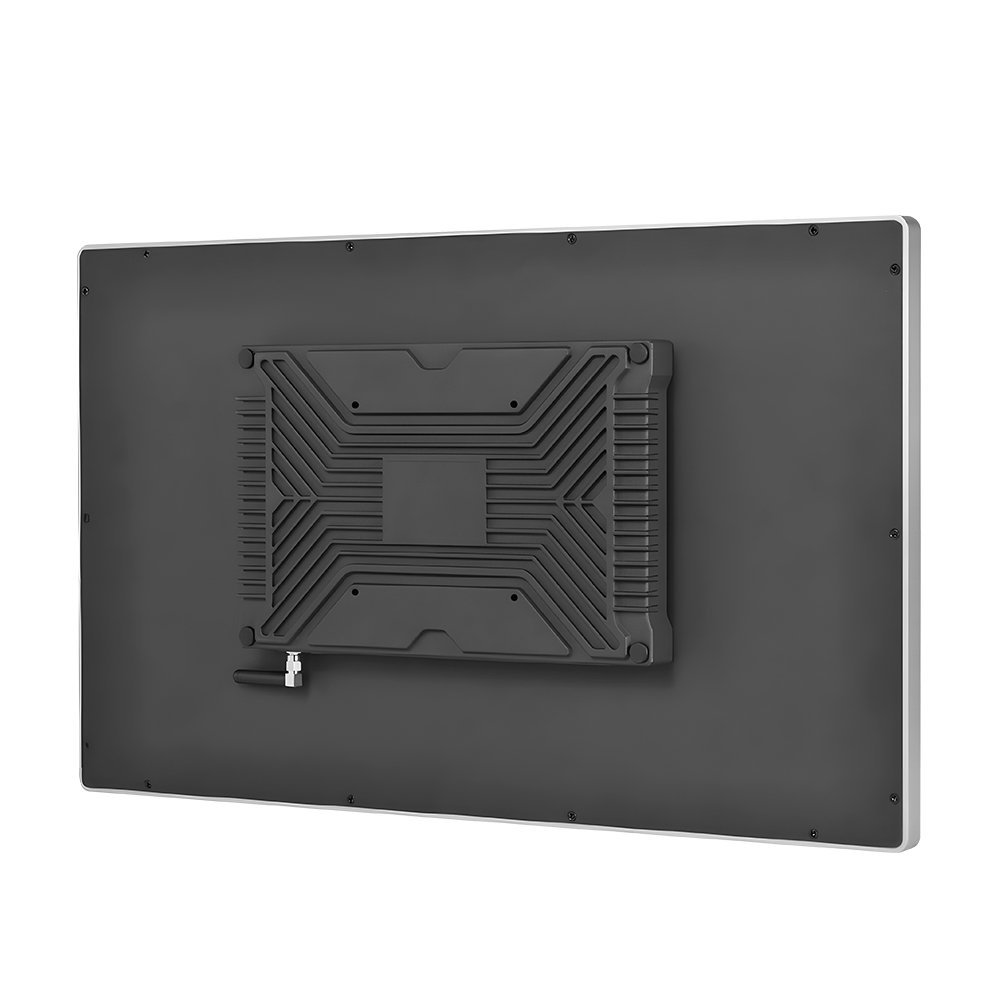
Experience Unmatched Clarity and Control: The Industrial Large Touch Screen Monitor Built for Your Business
Industrial Large Touch Screen Monitor (PCAP) for Kiosks & Control Rooms
Large-format PCAP touch monitors, including the industrial large touch screen monitor, are built for real deployment—stable touch, clear readability,
and integration-friendly design for OEM and system integrators. Ideal for public terminals,
industrial visualization, and interactive signage where reliability matters more than “lab specs.”
- Best for: self-service kiosks, control rooms, industrial operator stations, retail/wayfinding, terminals
- Core options: PCAP multi-touch, glove/wet tuning (project-based), high brightness, optical bonding, front sealing strategy
- Support: drawings + integration notes + configuration recommendation for your environment
Request a Spec Review — Share size, brightness target, and installation environment.
Key highlights
Stable PCAP touch for real environments
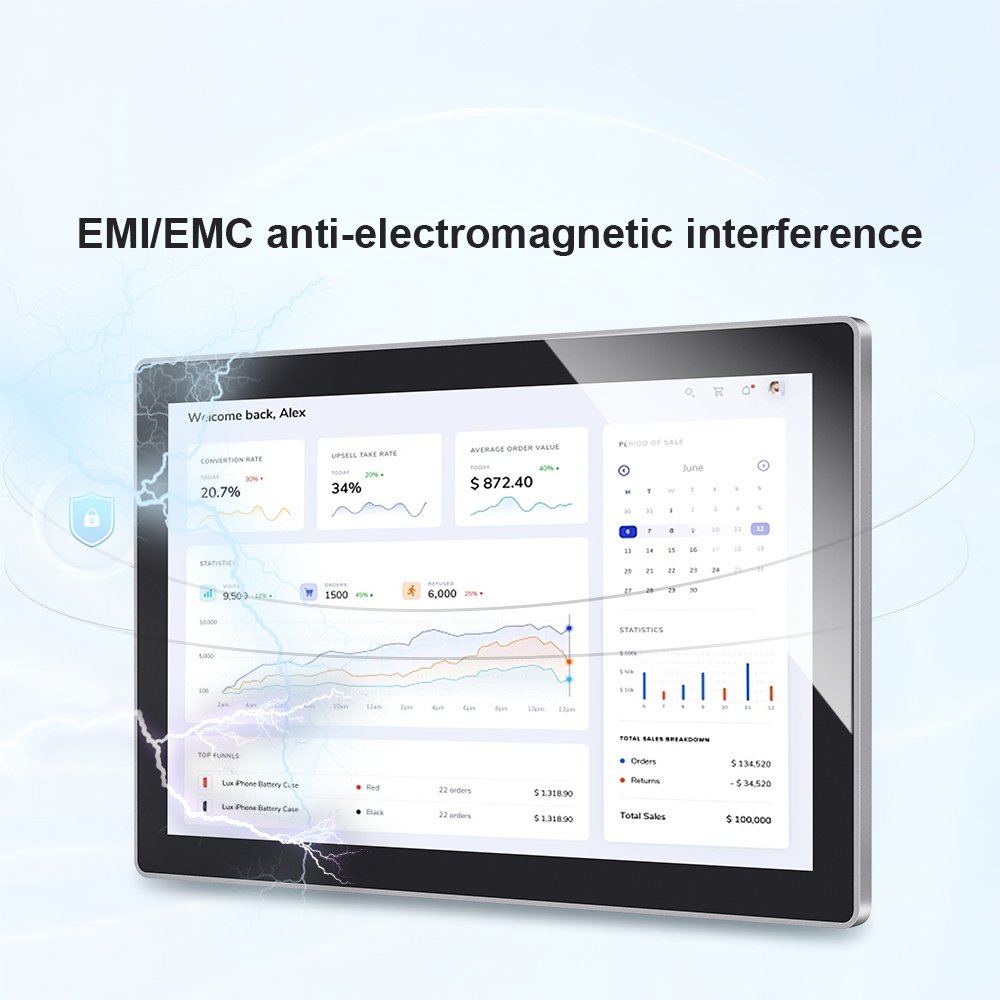
Large screens are more sensitive to EMI and enclosure stress. We recommend grounding and mounting practices to reduce ghost touch and drift.
Readability strategy (not just brightness)
For bright scenes, combine glare control (AG/AR) with (optional) optical bonding for better contrast and reduced reflection.
OEM/Integrator friendly
Configuration options across size, touch tuning, mounting and interfaces help shorten iteration cycles and reduce integration risk.
What you can configure
Screen size & aspect
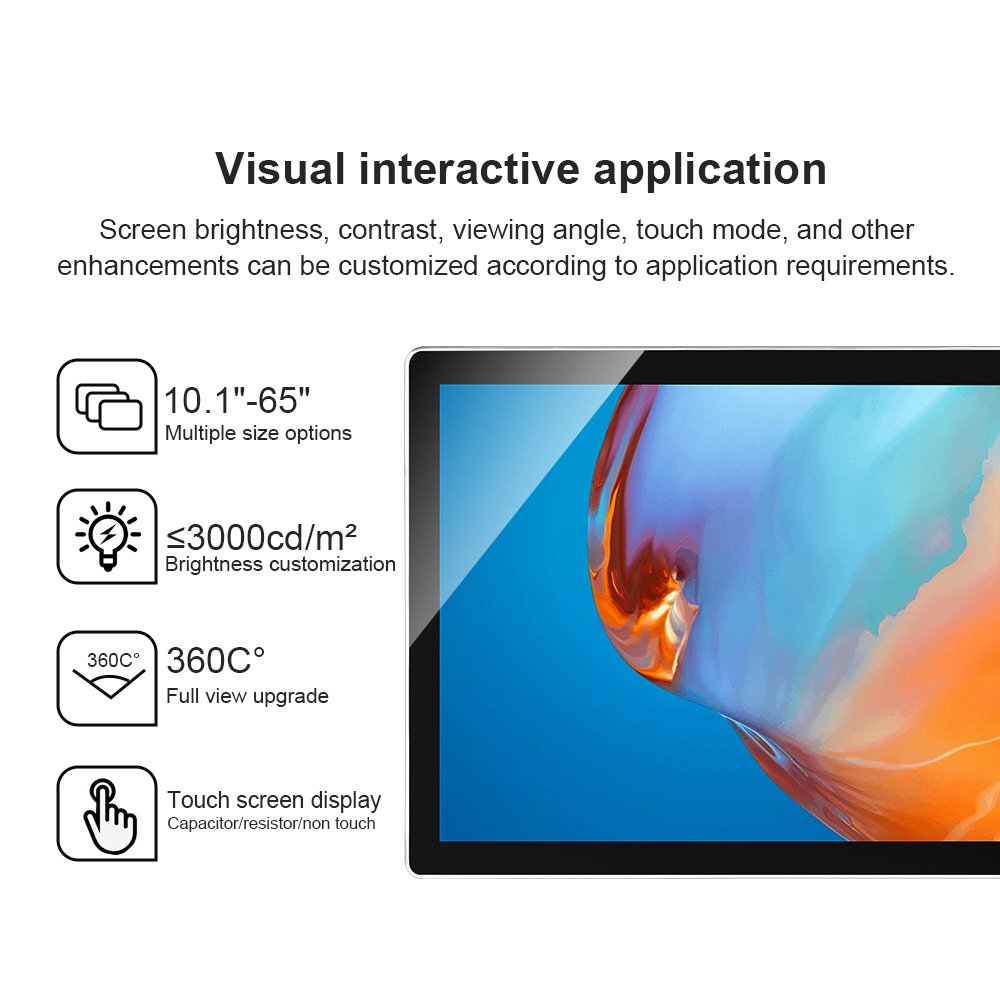
Select size by viewing distance, UI density, and installation space (kiosk, control room, signage).
Brightness & glare control
Standard/high brightness options with AG/AR/AF surface treatment (project-based).
Touch tuning
Multi-touch points, glove/wet touch behavior (validate with real gloves and water film in final enclosure).
Front sealing strategy
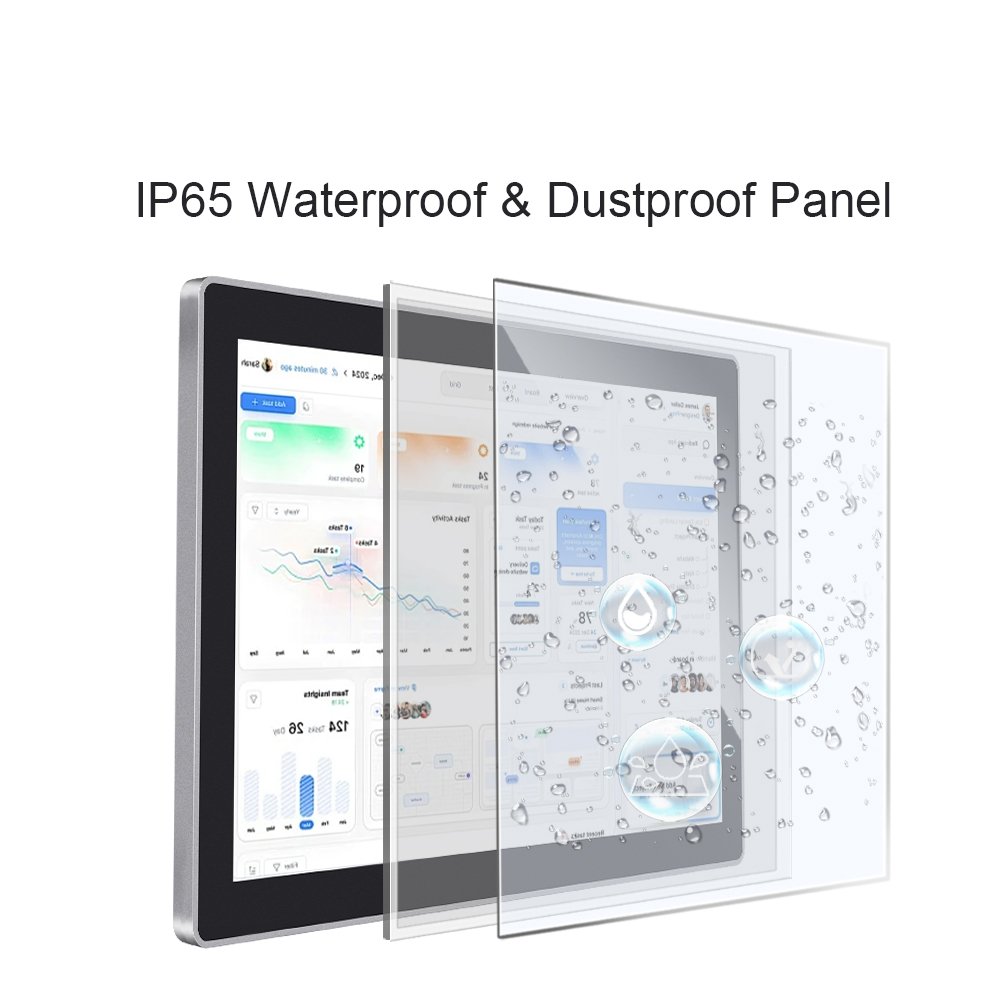
If required, design toward front IP sealing as a system outcome (glass + gasket + bezel + assembly).
Mounting & integration
VESA/mounting pattern planning, cable routing, grounding reference—key to field stability.
Controller compatibility
Project-based controller selection and tuning aligned to your system constraints.
Related hub pages:
PCAP Touch Screen Monitor Series |
Touch Screen Monitor Category
Typical specifications (fill with your real parameters)
| Size | Large format (custom by project) |
| Touch | PCAP (multi-touch) |
| Touch Interface | USB / other |
| Resolution | FHD / other |
| Brightness | [standard / high brightness option |
| Cover Glass | thickness + strengthening |
| Surface Treatment | AG / AR / AF |
| Front Sealing | optional / by design |
Integration notes (large format)
Mechanical stress control
Large panels are sensitive to uneven bezel compression. Use uniform support points and controlled torque to avoid edge dead zones.
EMI / grounding / routing
Most ghost touch issues trace to EMI noise and grounding reference changes after assembly. Re-test in the final enclosure.
Outdoor/public terminals
Plan brightness and sealing together. Validate wet touch under real water film conditions if required.
Validation before deployment
Use a two-stage workflow: (1) bench baseline test, then (2) re-test after enclosure integration.
This prevents “works in lab, fails on site.”
Reference hub:
PCAP Touch Screen Monitor Series
FAQ
Is this a consumer-grade large touchscreen display?
No. It is designed for industrial/commercial deployment where stability, integration, and uptime are critical.
Can it work with gloves or water on the surface?
PCAP can be tuned for glove and wet touch. Final validation should be performed with real gloves/water film in the final enclosure.
What information do you need for a quick recommendation?
Target size, brightness requirement, environment (dust/water/temperature), front sealing need, and enclosure drawing.
Experience Unmatched Clarity and Control: The Industrial Large Touch Screen Monitor Built for Your Business Engineering Information
Experience Unmatched Clarity and Control: The Industrial Large Touch Screen Monitor Built for Your Business is a custom size industrial touch screen monitor for industrial HMI, kiosk, POS, medical, control and commercial equipment projects. It should be reviewed with display input, touch interface, mounting, enclosure, power and operating environment so Ever Glory can confirm integration risk before sampling or quotation.
- Product Category
- Touch Screen Monitor
- Product Role
- industrial touch screen monitor
- Size / Format
- custom size
- Best Fit
- industrial HMI, kiosk, POS, medical, control and commercial equipment projects
- Review Focus
- display input, touch interface, mounting, enclosure, power and operating environment
- Customization
- Cover glass, touch tuning, mounting structure, interface configuration, branding, bonding and enclosure fit
Information Needed for Review
- Mechanical drawing, target installation space and custom size display or housing requirement.
- display input, touch interface, mounting, enclosure, power and operating environment.
- Operating environment, brightness, temperature, IP rating, vibration, cleaning or glove-touch expectations.
- Target quantity, certification needs, cable direction, connector position and production schedule.
Typical Applications
OEM equipment, kiosks, self-service terminals, medical devices, POS systems and industrial control interfaces.
Suitable for projects that need stronger enclosure design, stable touch performance and long-term field reliability.
Compare related Ever Glory products in the Touch Screen Monitor category for similar integration requirements.
Common Engineering Questions
Is this industrial touch screen monitor ready for direct installation?
It depends on the final enclosure, interface, power, mounting and software environment. Ever Glory reviews the drawings and application before confirming a production-ready solution.
What information helps confirm feasibility faster?
Send display input, touch interface, mounting, enclosure, power and operating environment, mechanical drawings, operating environment, target quantity and any branding or certification requirements.
Can Ever Glory customize this product?
Yes. Common customization includes cover glass, touch controller tuning, bonding, brightness, interface, housing, cable direction, logo printing and mounting structure.
Related Ever Glory Products
For an accurate quotation, send drawings and application details instead of only screen size.


