.png)
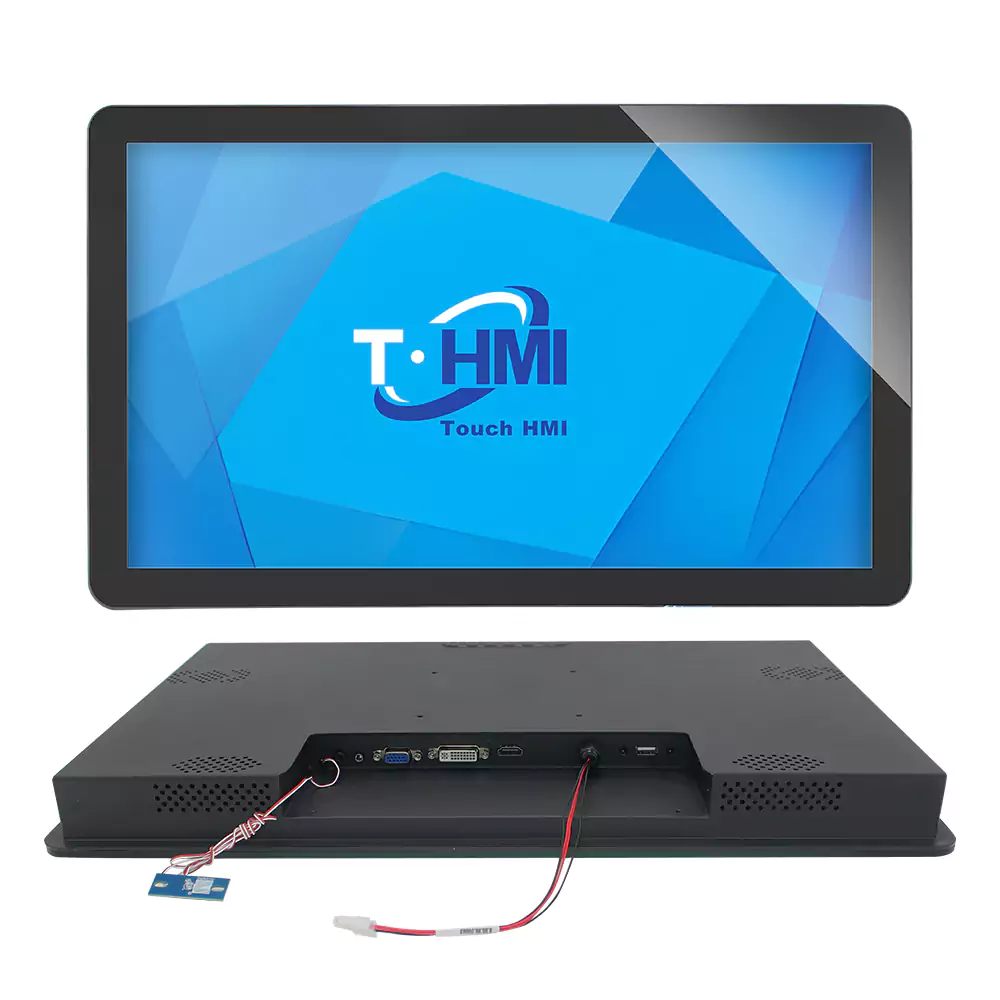
This 21.5 inch industrial touch screen monitor is built for demanding HMI projects where a normal office display fails quickly.
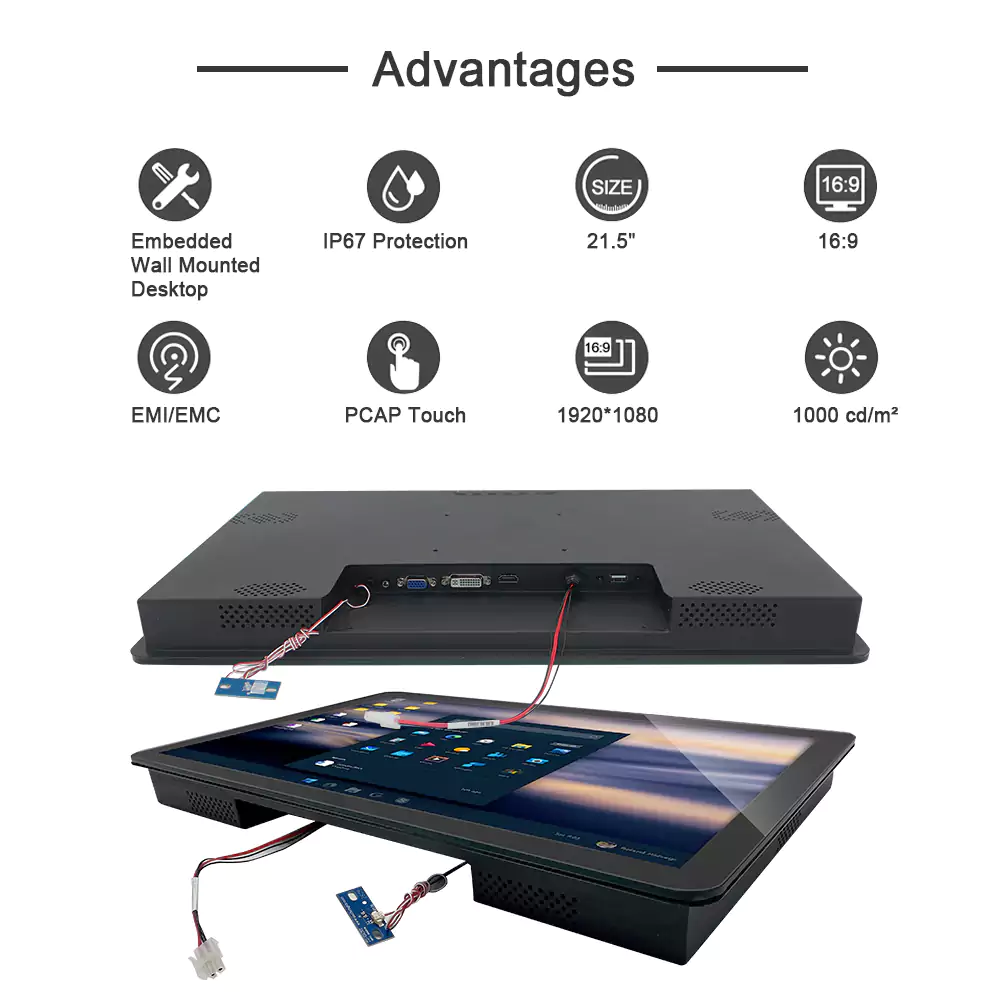
It combines a 1000 cd/m² high brightness panel, PCAP touch and IP67 front protection, so operators can read and control the screen even in harsh industrial or outdoor environments.
Many HMI projects run in places with dust, moisture and fast temperature changes.
Because of that, this 21.5 inch industrial touch screen monitor uses a rugged metal housing and a sealed front frame.
The IP67 front rating helps protect the electronics from rain, washdowns and airborne particles, so the display keeps working when a standard monitor would stop.
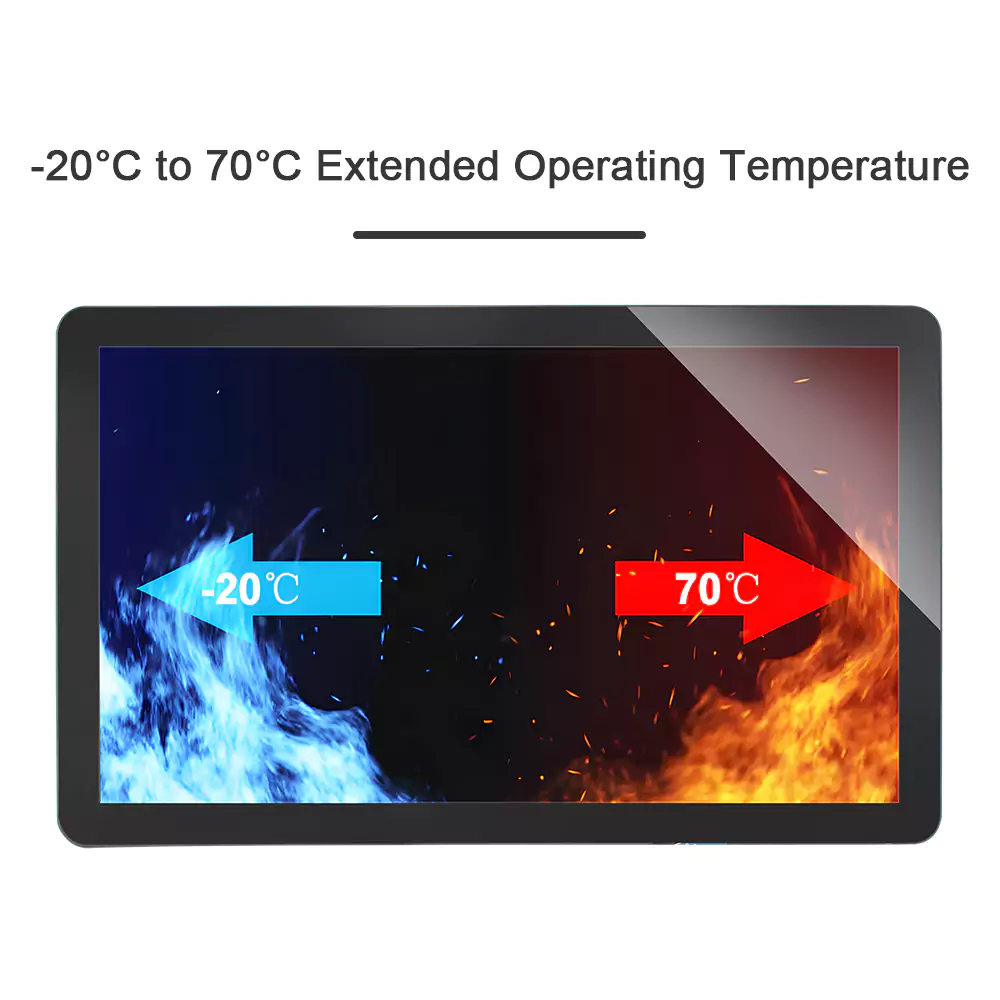
In addition, the unit operates from -20 °C to 70 °C.
This extended temperature range makes it suitable for outdoor kiosks, factory floors, cold rooms and semi-outdoor terminals.
When you need deeper knowledge about sealing and rugged design, you can also refer to our guide on
waterproof touch screens.
Strong ambient light usually washes out normal displays.
To solve this problem, the 21.5 inch panel delivers up to 1000 cd/m² brightness with a 1920×1080 resolution.
As a result, content stays readable in bright workshops, near windows and in outdoor enclosures.
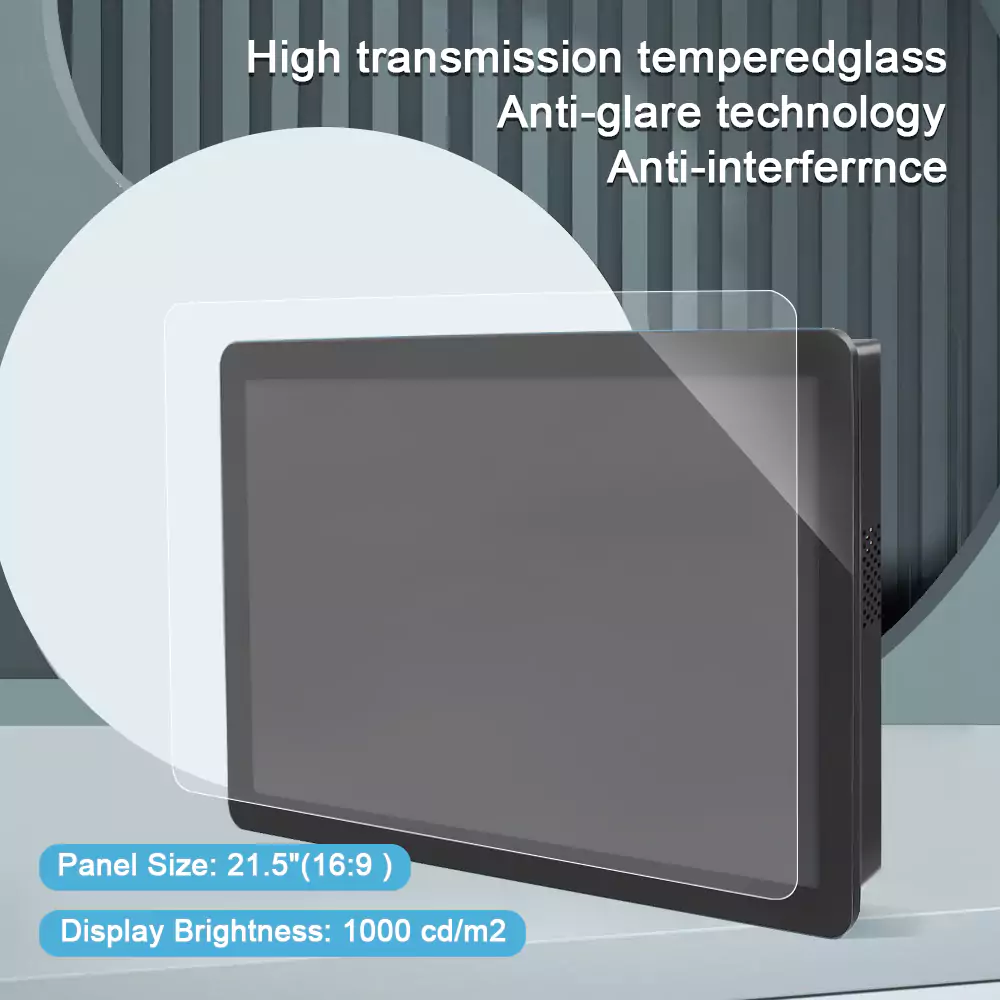
Moreover, the high-transmission tempered glass and anti-glare treatment reduce reflections and stray light.
Users see crisp text and vivid graphics instead of mirror-like glare.
For design teams that focus on outdoor projects, our article on
sunlight-readable touch displays
offers additional background.
The monitor uses projected capacitive (PCAP) touch technology.
Therefore, it supports familiar gestures such as tap, swipe and zoom, which feel natural to operators who already use tablets and smartphones.
PCAP technology also provides stable performance over time with minimal drift, so your HMI buttons stay accurate on screen.
For many applications, engineers need to decide between a standalone industrial touch screen monitor and an all-in-one device.
If you plan to integrate an industrial computer in the same enclosure, you may also consider our
industrial panel PC solutions,
which work well alongside this 21.5 inch display.
System integrators often work with existing cabinets and limited space.
For this reason, the 21.5 inch industrial touch screen monitor supports both embedded and wall-mounted installation.
Standard mounting holes simplify mechanical design and allow quick replacement for older screens.
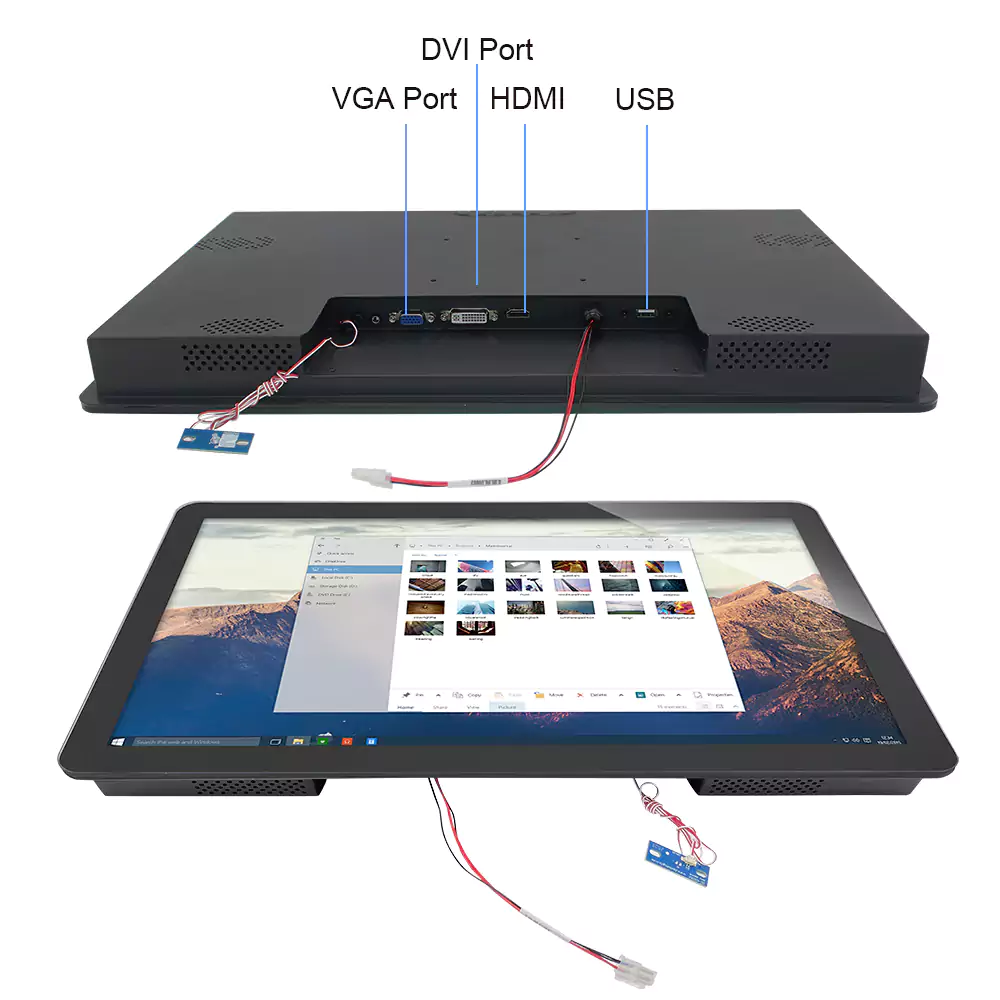
On the rear I/O panel you will find VGA, DVI, HDMI and USB ports.
Consequently, the display connects easily to PLCs, industrial PCs and standard desktop hardware without extra converters.
This flexibility shortens integration time and reduces project risk.
Continuous 24/7 operation creates heat inside any enclosure.
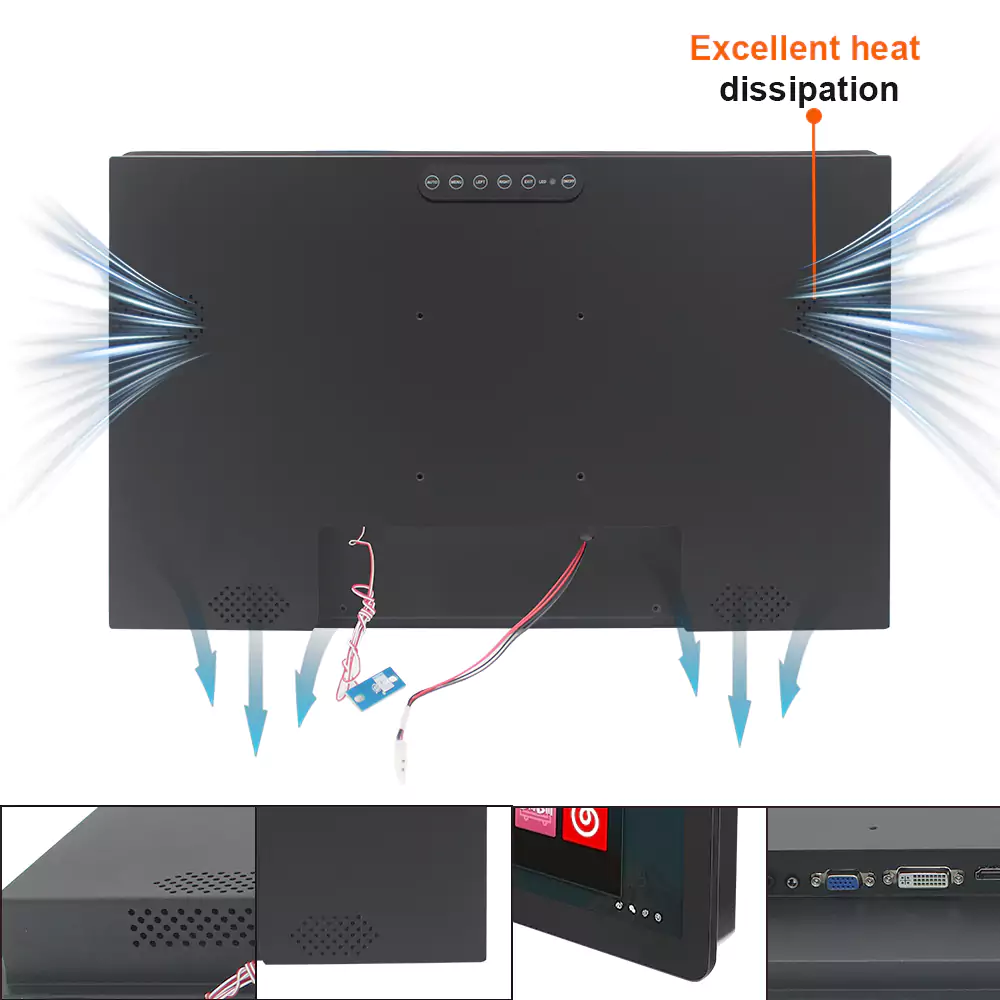
To handle this, the housing of the industrial touch screen monitor uses optimized airflow paths and multiple ventilation areas.
Heat flows out from the sides and bottom, while cool air moves in, which helps keep internal components within a safe temperature range.
Thanks to this thermal design, the display supports long duty cycles in kiosks, production lines and control rooms.
For projects where the monitor runs in strong sunlight or inside sealed cabinets, our article on
outdoor high brightness touch displays
gives practical tips on enclosure and cooling design.
Industrial automation projects depend on stable HMI devices.
That is why this 21.5 inch industrial touch screen monitor follows strict EMI/EMC design practices and uses industry-proven components.
Proper shielding and grounding help reduce interference from inverters, motors and other noisy equipment, so the touch function stays reliable.
When engineers specify a display for new equipment, they often want to compare different sizes and mounting options.
If you need guidance on system-level selection, you can review
how to choose a rugged industrial touch screen monitor
and
how to choose the size of industrial touch screens
before finalizing your design.
This 21.5 inch industrial touch screen monitor suits OEMs, machine builders and solution providers who need a stable platform for long-term projects.
On request, project orders can include customized logos, mounting brackets, cables, cover glass designs or adjusted brightness levels, so the display matches both technical and branding requirements.
Share your drawings, environment details and quantity plan with our team.
Together we can confirm the configuration, arrange samples and help you launch a reliable HMI solution with lower trial-and-error cost.
The 21.5 inch industrial touch screen monitor is designed for human machine interface (HMI) in demanding projects.
Typical uses include outdoor kiosks, factory control panels, car wash stations, ticketing machines, logistics terminals and other equipment that needs a reliable sunlight readable touch display.
Yes. The monitor combines 1000 cd/m² high brightness with an IP67 front bezel, so it can be used in outdoor or semi-outdoor enclosures.
The extended operating temperature range from -20 °C to 70 °C helps the display keep working in both winter cold and summer heat when it is integrated correctly into a sealed housing.
The enclosure and thermal design support continuous 24/7 operation.
Optimized airflow paths and multiple ventilation areas help dissipate heat, which reduces stress on internal components and improves long-term reliability for always-on applications.
The monitor offers VGA, DVI, HDMI and USB interfaces.
This combination allows easy connection to industrial PCs, embedded controllers and standard desktop computers without extra converters, so system integrators can keep their existing hardware platform while adding a rugged touch HMI.
The 21.5 inch industrial touch screen monitor uses projected capacitive (PCAP) multi-touch technology.
It supports familiar gestures and provides stable positioning accuracy over time, which helps operators interact quickly with on-screen buttons and charts.
For OEM and project customers, the industrial touch screen monitor can be tailored with options such as logo printing, special mounting brackets, custom cables, different cover glass designs or adjusted brightness levels.
Engineering support is available to review mechanical drawings, environment requirements and quantity plans before you confirm the final specification.