Quick Answer
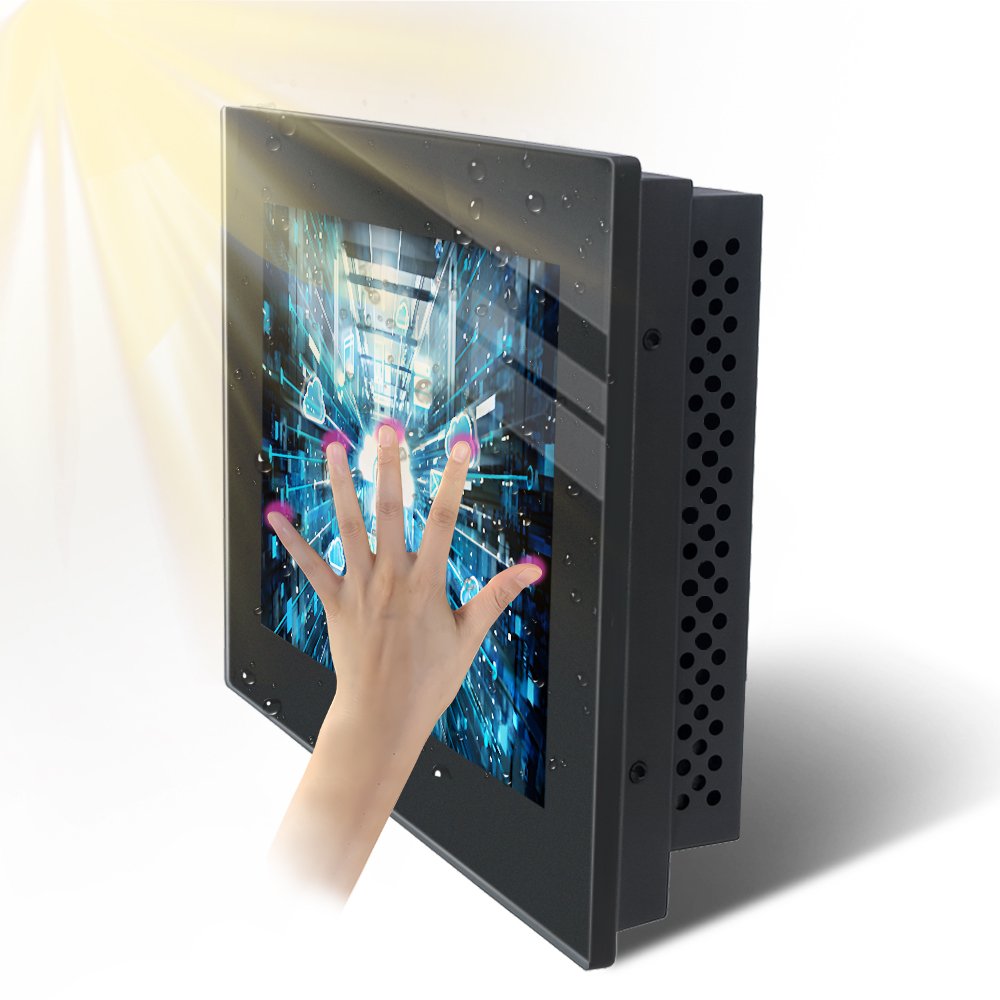
A sunlight readable touch screen monitor guide should not only talk about brightness. Outdoor readability depends on brightness, reflection, contrast, cover glass, bonding method, viewing angle, thermal design and long-term backlight reliability. A high-nit LCD can still look poor if reflection is high or if the screen overheats in direct sunlight.
Article Map
Key Takeaways
- Sunlight Readable Touch Screen Monitor decisions should start from the real installation environment, not only the screen size.
- Confirm touch behavior, visibility, sealing, controller stability and mechanical fit before moving to production.
- For OEM projects, a short requirement checklist reduces redesign risk and long-term service cost.
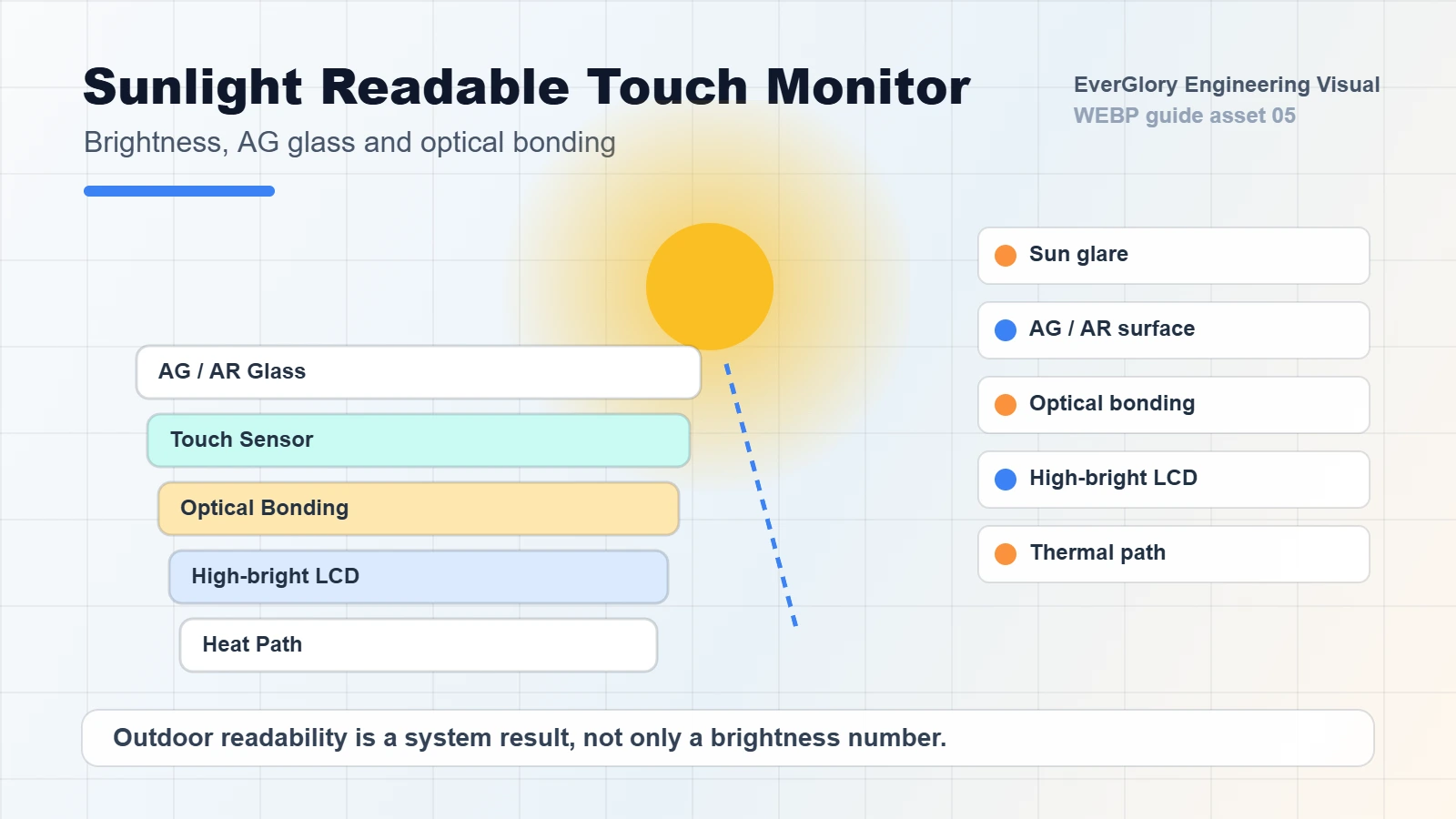
A sunlight readable touch screen monitor guide should not only talk about brightness. Outdoor readability depends on brightness, reflection, contrast, cover glass, bonding method, viewing angle, thermal design and long-term backlight reliability. A high-nit LCD can still look poor if reflection is high or if the screen overheats in direct sunlight.
This upgraded article combines local materials about high brightness, anti-glare glass, AG glass selection, optical bonding and outdoor reliability into a practical buyer guide.
Sunlight Readability Is Not Determined by Brightness Alone
Quick answer: A 1000-nit display is not automatically sunlight readable. Outdoor readability depends on at least four factors: LCD luminance, front-surface reflection, internal reflection in the touch-display stack, and the contrast of the displayed UI under real ambient light.
1. LCD Brightness
Nit value describes light output, but it does not describe reflection, heat, UI contrast or viewing angle.
2. Surface Reflection
AG, AR and cover glass selection affect how external light reflects from the front surface.
3. Internal Reflection
An air gap can create extra internal reflection. Optical bonding can reduce internal interface reflection when the cost and process risk are justified.
4. Thermal Performance
High-brightness backlight plus solar load can increase temperature. Thermal review is part of readability design.
Buying Decision Matrix
| Environment | Brightness | Optical Bonding | AG/AR | Thermal Review |
|---|---|---|---|---|
| Bright indoor | Project-specific | Optional | AG often useful | Basic |
| Semi-outdoor | Higher brightness | Optional / recommended | Evaluate | Recommended |
| Direct sunlight | High brightness required | Strongly evaluate | Evaluate AG/AR | Required |
| Outdoor sealed enclosure | High brightness | Often valuable | Evaluate | Critical |
Request an Outdoor Readability Evaluation
Send installation orientation, direct sunlight or shaded condition, target brightness, cover glass, AG/AR requirement, optical bonding requirement, operating temperature and enclosure photo or drawing. Ever Glory can review the optical stack before sampling.
Brightness Is Only the Starting Point
Brightness is usually measured in nits or cd/m2. Indoor displays may work well at lower brightness, while outdoor and semi-outdoor terminals often require higher brightness. However, a brighter LCD also creates more heat and may shorten backlight life if the thermal design is weak.
For outdoor use, ask:
- What is the target ambient light condition?
- Is the screen under direct sunlight or under a canopy?
- Is auto brightness needed?
- How is heat removed from the display structure?
- What is the backlight life at the operating temperature?
The goal is readable performance, not just the highest number on a datasheet.
Reflection Control: AG, AR and Optical Bonding
Strong reflection can make a display unreadable even when the brightness is high. Surface and bonding design can improve real-world visibility.
| Option | Main Function | Best Fit |
|---|---|---|
| AG glass | Diffuses glare | Outdoor kiosks, industrial panels, bright indoor areas |
| AR coating | Reduces reflection and improves transmission | High-end outdoor or inspection displays |
| AF coating | Reduces fingerprints | Public-use terminals and kiosks |
| Optical bonding | Reduces internal reflection and air gap | Outdoor, vehicle, marine and high-reliability displays |
AG glass is useful when direct glare is the main issue. Optical bonding is useful when visibility, structure and condensation resistance all matter. In many outdoor projects, the best result comes from matching brightness, AG/AR treatment and bonding together.
Thermal Design Cannot Be Ignored
Outdoor monitors may face sunlight, high ambient temperature and heat from the backlight at the same time. If the housing cannot remove heat, the LCD may darken, the backlight may decay faster or the touch system may become unstable.
For high-brightness monitors, evaluate metal housing, ventilation, heat paths, backlight driving strategy and installation space. A sealed outdoor cabinet needs special attention because water protection and heat dissipation often compete with each other.
Touch Performance in Outdoor Light
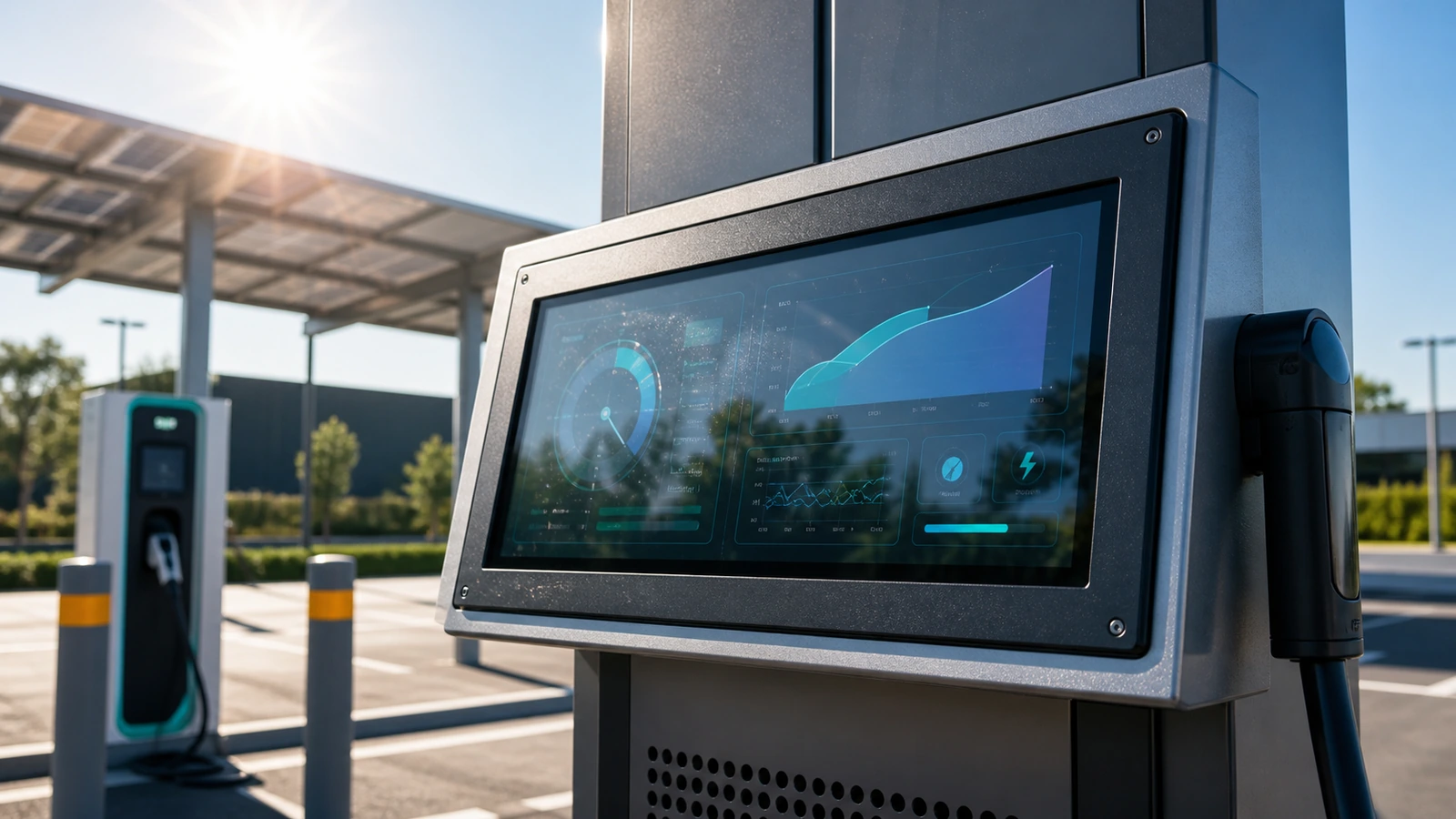
Outdoor terminals often require PCAP touch with cover glass. The touch system must remain stable with sunlight, water droplets, gloves and EMI from the host system. For outdoor EV chargers, vending machines and information kiosks, ask for validation under real or simulated conditions rather than only room-temperature testing.
Internal Links
- Sunlight readable touch screen monitor
- Touch screen monitor category
- Optical bonding touch display solutions
FAQ
Is higher brightness always better?
No. Higher brightness improves visibility but also adds heat and cost. Reflection control and thermal design are equally important.
What is the role of AG glass?
AG glass reduces glare by diffusing reflected light, making the display easier to read in bright environments.
When is optical bonding recommended?
It is recommended when outdoor readability, condensation resistance, vibration resistance and a stronger display structure are important.
Can sunlight readable monitors be waterproof?
Yes, but the sealing, connectors, cabinet design and thermal dissipation must be reviewed together.
Need a Project-Specific Recommendation?
EverGlory supports OEM and industrial display projects with PCAP touch panels, open-frame touch monitors, waterproof front designs, optical bonding, high-brightness LCDs and interface customization. Share the installation environment, target size, interface and protection needs, and the engineering team can help narrow the specification before sampling.