
Component and display integration scope
Medical Equipment Touch Screen Integration
Integrate touch panels and displays with controlled drawings, defined cleaning and glove inputs, recorded configurations and a clear boundary between component evidence and final-device qualification.

Engineering scope
Design the user interface around the final equipment
Mechanical integration
Define active area, viewing area, cover-glass outline, mounting, edge clearance, cable exit and service access.
Cleanability inputs
Specify surface treatment, named cleaning agents, concentration, contact time and cleaning frequency for compatibility evaluation.
Glove operation
Identify glove material, thickness, cover-glass stack, grounding and required gesture behavior before controller tuning.
Display selection
Align size, resolution, luminance, viewing angle, interface, lifecycle and installation constraints with the equipment design.
EMC engineering
Review controller, grounding, shielding, cable routing and host-system interaction without presenting an unsupported system-pass claim.
Lifecycle control
Record key components, approved alternatives, firmware, drawings and change notifications for long-running OEM programs.
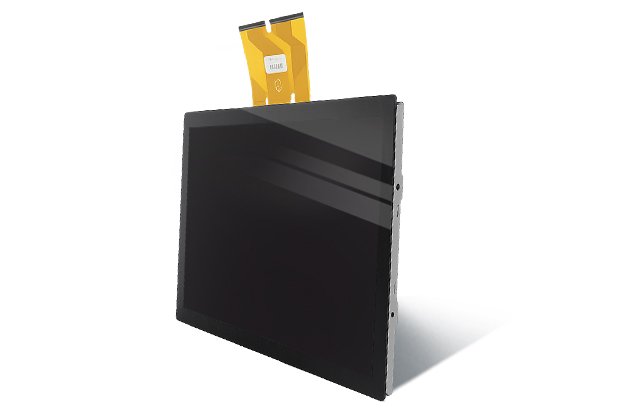
Responsibility boundary
Component evidence and final-device qualification are different
EverGlory can provide drawings, material information, configuration records, internal verification records and applicable third-party product reports within their stated scope. The device manufacturer defines the final safety architecture, essential performance, risk controls, usability engineering and regulatory submission.
No blanket medical certification claim: the page does not state that every touch panel, module, monitor or panel PC is certified for medical use.
Controlled development
Recommended OEM integration workflow
Use case
Define user, equipment function, cleaning, glove and environment.
Interfaces
Confirm mechanics, display, touch, cable and host-system interfaces.
Risk inputs
Identify EMC, surface, lifecycle and service risks owned by the equipment program.
Prototype
Build a traceable configuration with recorded controller settings.
Evaluation
Test in the intended equipment under agreed conditions.
Handover
Release drawing, BOM, records and change-control responsibilities.
RFQ checklist
Information needed for a defensible proposal
Common engineering questions
Frequently asked questions
What is the compliance boundary for these touch displays?
EverGlory supplies configurable touch and display components or assemblies. The medical-device manufacturer is responsible for final-device risk management, safety, EMC, usability and regulatory qualification.
Can the surface be cleaned with hospital disinfectants?
Material compatibility must be confirmed against the named cleaning agent, concentration, contact time, frequency and surface treatment. A generic chemical-resistance claim is not sufficient.
Can PCAP touch work with medical gloves?
Controller tuning can be evaluated for specified glove materials and thicknesses on the intended cover-glass, grounding and installed configuration. The result must be recorded for that setup.
How can EverGlory support system EMC work?
EverGlory can review grounding, cable routing, controller settings and display integration. Final system-level compliance must be demonstrated by the device manufacturer with the applicable laboratory evidence.
Review the component integration scope for your equipment
Send the equipment type, drawing, display and touch interfaces, named cleaning agents, glove conditions, target markets and lifecycle requirements. EverGlory will define the component-level engineering scope.
Component evidence boundary
Supplier evidence supports integration; it does not certify the medical device
The available evidence can support component selection and engineering review when the exact touch/display configuration is matched.
| Evidence available | What it supports | What it does not establish |
|---|---|---|
| Factory-recorded ESD engineering verification, Sep 2026 | Shows an internal powered-sample verification capability and test setup | No ESD level, pass result or medical-device compliance without the matching record. |
| CE EMC, FCC, RoHS and REACH product-family files | Supports configuration-specific component evidence review | No automatic extension to medical electrical equipment or the final installed system. |
| ISO 9001, ISO 14001 and IATF 16949 certificates | Supports organizational and process assessment within the stated certified scopes | No product safety, clinical performance or medical-device certification. |
| Controlled drawings, specification and inspection route | Supports mechanical fit, interface, optical-stack and revision review | No final-device risk-management or regulatory approval decision. |
Required before sampling: define glove type, cleaning agents, ESD/EMC targets, enclosure and grounding, interfaces, host software, lifecycle expectations and the final-device verification responsibilities.
Related evidence
Evidence path for medical equipment integration
Component records support supplier review, while the equipment manufacturer retains responsibility for final-device qualification.
Touch display modules
Compare module formats for embedded equipment integration.
Quality and testing
Define glove, cleaning, ESD, EMC and installed-system checks.
Certifications and compliance
Review component and report scope without extending it to the final device.
OEM and ODM workflow
Control drawings, configuration, sample review and release.
Related products
Product routes for this application
Use these product families as engineering starting points. The quoted model, interface, optical stack, enclosure and validation plan remain project-specific.
17-inch medical-equipment touch display module
A module route for equipment-level optical and touch integration.
Projected capacitive touch panel
A PCAP route when the equipment manufacturer owns the display and enclosure.
18.5-inch touch display module
A display-module route requiring project-specific cleaning and EMC review.
21.5-inch embedded touch monitor
A monitor route requiring final-equipment qualification.