Quick Answer
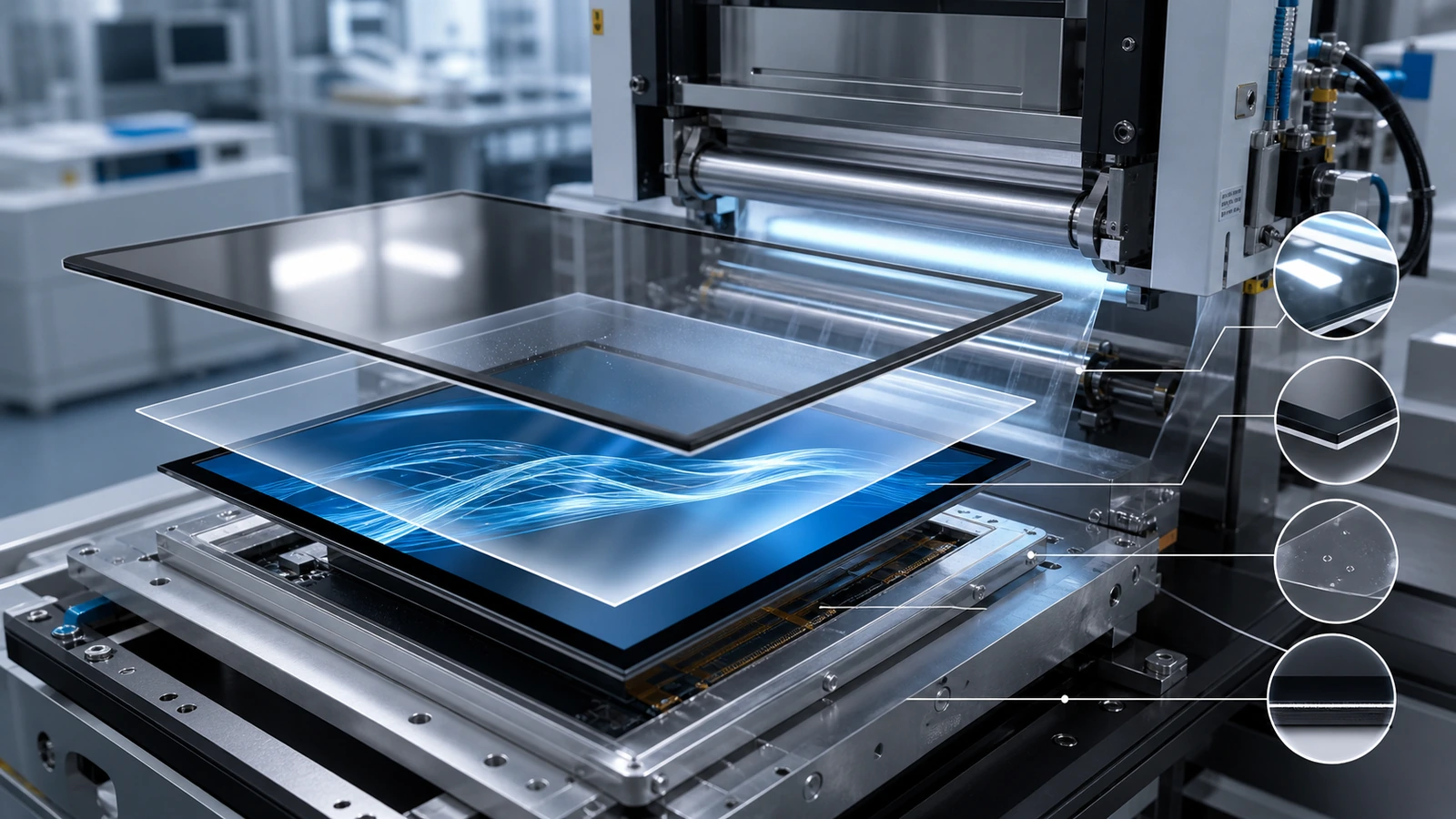
An optical bonding touch screen uses transparent adhesive to bond the cover glass or touch panel directly to the display surface. Compared with air bonding, it can improve readability, reduce internal reflection, strengthen the structure and help reduce fogging risk. But it also increases process complexity and cost, so it should be chosen for the right reasons.
Article Map
Key Takeaways
- Optical Bonding Touch Screen: When It Is Worth the Cost decisions should start from the real installation environment, not only the screen size.
- Confirm touch behavior, visibility, sealing, controller stability and mechanical fit before moving to production.
- For OEM projects, a short requirement checklist reduces redesign risk and long-term service cost.
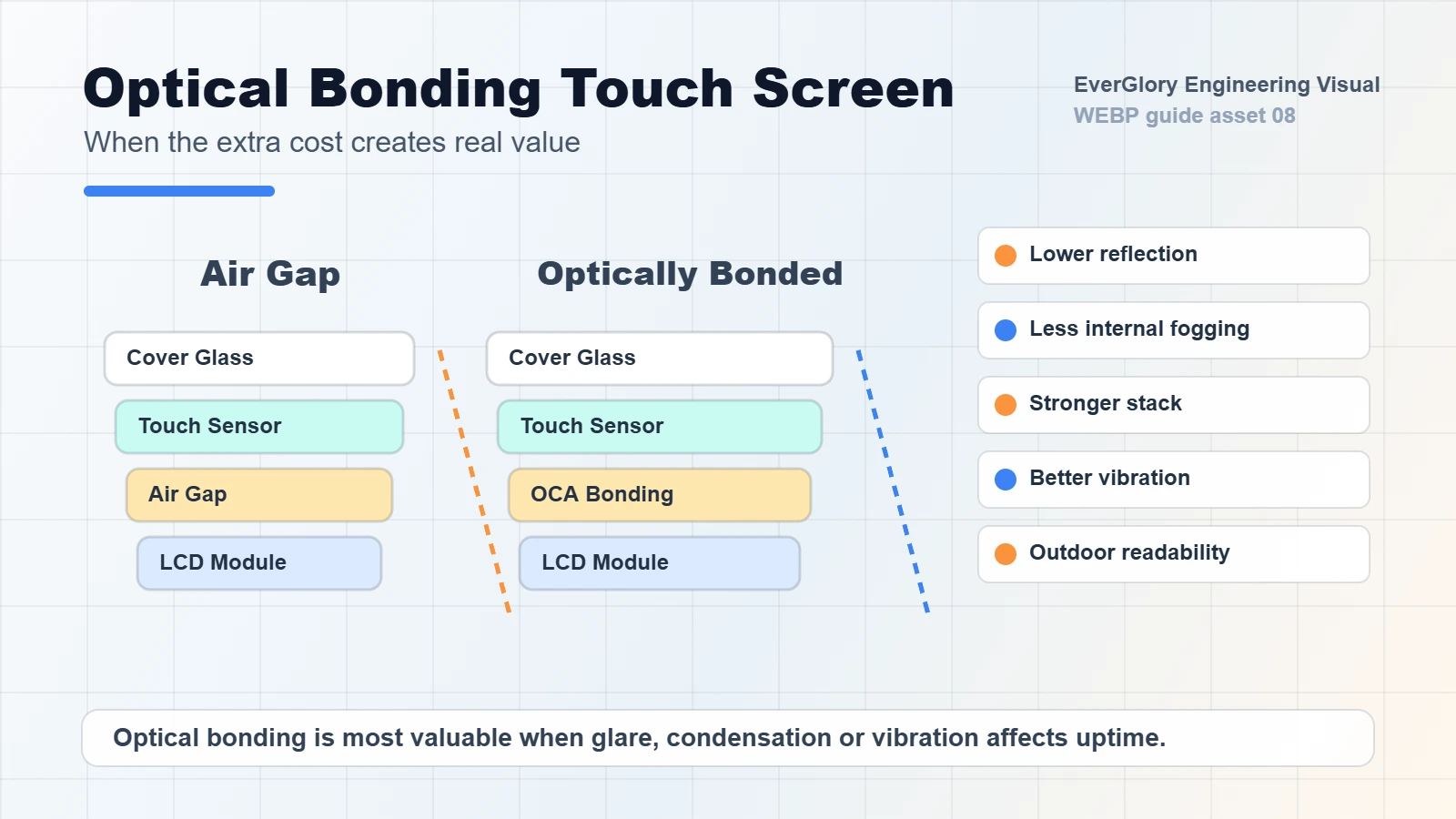
An optical bonding touch screen uses transparent adhesive to bond the cover glass or touch panel directly to the display surface. Compared with air bonding, it can improve readability, reduce internal reflection, strengthen the structure and help reduce fogging risk. But it also increases process complexity and cost, so it should be chosen for the right reasons.
This upgraded article is based on local materials about air bonding vs optical bonding, full bonding power, installation suggestions, medical bonding and anti-bubble solutions.
Air Bonding vs Optical Bonding
Air bonding keeps an air gap between the cover glass or touch panel and the LCD. It is simpler and usually lower cost. Optical bonding fills that gap with optical adhesive, creating a more integrated structure.
| Factor | Air Bonding | Optical Bonding |
|---|---|---|
| Cost | Lower | Higher |
| Reflection | More internal reflection | Lower reflection |
| Outdoor readability | Limited in bright light | Better visibility |
| Structure | Less rigid | Stronger laminated structure |
| Fogging risk | Higher in some environments | Lower air-gap condensation risk |
| Repair difficulty | Easier in some cases | More process-dependent |
When Optical Bonding Is Worth It
Optical bonding is usually worth considering when the display faces strong light, vibration, humidity, temperature change or high reliability requirements.
Strong-fit applications include:
- Outdoor kiosks and EV charging stations
- Vehicle and marine displays
- Medical equipment touch displays
- Industrial HMI in vibration environments
- High-brightness displays that need better contrast
- Public terminals that need stronger front structure
For indoor low-risk equipment, air bonding may still be enough. The right decision depends on the expected field environment and service life.
Readability and Reflection
The air gap in a display stack can create internal reflection. Under sunlight or strong ambient light, the user may see glare instead of interface content. Optical bonding reduces this internal reflection and can improve perceived contrast.
For sunlight-readable monitors, optical bonding works best when combined with suitable brightness, AG/AR glass and thermal design. It is not a replacement for brightness, but it helps brightness perform more effectively.
Reliability and Process Control
Optical bonding quality depends on process control. Bubbles, dust, uneven adhesive, edge leakage or stress from mechanical assembly can affect long-term reliability. For projects with high humidity, vibration or temperature cycling, ask about bonding material, process cleanliness, aging tests and mechanical installation guidance.
Full bonding can improve structure, but poor assembly can still cause edge light leakage, stress marks or delamination. The display, touch panel, cover glass and enclosure should be reviewed together.
Internal Links
FAQ
Is optical bonding always necessary?
No. It is most valuable for outdoor, high-brightness, humid, vibration or high-reliability applications.
Does optical bonding improve sunlight readability?
Yes, it reduces internal reflection and can improve contrast, especially when combined with suitable brightness and surface glass.
What are common optical bonding risks?
Common risks include bubbles, dust, edge leakage, stress marks and poor long-term reliability if process control is weak.
Can optical bonding be used for medical displays?
Yes, when the design needs better cleanability, visibility and structural integration, but project-specific validation is still required.
Need a Project-Specific Recommendation?
EverGlory supports OEM and industrial display projects with PCAP touch panels, open-frame touch monitors, waterproof front designs, optical bonding, high-brightness LCDs and interface customization. Share the installation environment, target size, interface and protection needs, and the engineering team can help narrow the specification before sampling.