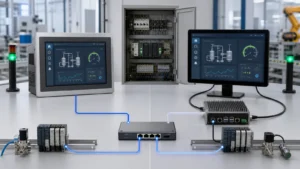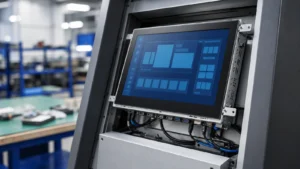

The best industrial touch screen display for a harsh environment is the configuration that meets the machine’s operating conditions and passes an agreed acceptance plan. Start with exposure, installation and operator behavior, then compare the exact display, touch stack and enclosure.
For an effective shortlist: define where the screen is exposed, what can cause failure, and which records will demonstrate acceptable performance. A product-family description helps narrow the options; the approved model specification and matching test evidence support the final decision.
1. Translate the environment into testable requirements
“Industrial grade” does not describe one universal operating condition. A shaded machine panel, a washdown station and a sun-exposed payment terminal need different protection. Record normal operation, cleaning, storage and foreseeable misuse separately.
| Exposure or failure risk | Configuration to review | Evidence to request |
|---|---|---|
| Rain, dust or cleaning liquid | Front seal, rear enclosure, cable entries, connectors and mounting compression | Protection scope and test report for the relevant assembled configuration |
| Direct sun and enclosure heat | Brightness, reflections, optical bonding, backlight control and heat removal | Optical data and powered thermal results under defined mounting conditions |
| Gloves, moisture or false touches | Cover glass, controller firmware, touch tuning, grounding and power supply | Actual glove and liquid test matrix, including recovery and unintended-input behavior |
| Cold, temperature cycling or condensation | LCD operating limits, startup behavior, adhesive stack and enclosure ventilation | Powered environmental test conditions, sample identity and recorded outcomes |
| Impact, vibration or repeated cleaning | Glass support, mounting hardware, coating and chemical compatibility | Applicable mechanical tests and cleaning-cycle criteria for the quoted construction |
For ingress protection, distinguish a rated front surface from a protected complete enclosure. An impact rating also depends on the tested assembly; glass thickness alone does not establish the result.
2. Choose the integration format before the screen size
Start with the industrial touch screen monitor range, then shortlist by how the display fits into your equipment. Confirm active area, overall dimensions and service clearance from the drawing.
Panel-mount monitor
A panel-mount touch monitor suits front-panel integration. Review cutout dimensions, panel thickness, gasket compression, rear connections and access for replacement.
Open-frame monitor
An open-frame touch monitor supports integration behind a custom bezel or cover. The equipment design must address enclosure sealing, glass support and ventilation.
Outdoor high-brightness monitor
An outdoor high-brightness touchscreen monitor is a starting point for exposed equipment. Check sunlight contrast, enclosure temperature, wet-touch behavior and installation orientation together.
These are product routes for configuration review. Confirm the selected model’s interfaces, power input, mounting, operating limits and protection scope before committing to a design.
Separate operating temperature from storage temperature, and ask how startup, sustained brightness and touch behavior are evaluated at the limits. For enclosed equipment, the air around the display may be hotter than the room. Define the measurement location and operating load in the acceptance plan.
3. Match every claim to the supplied configuration
A useful evidence package identifies the model, drawing revision, LCD, touch controller, cover glass, firmware and relevant assembly details. Check that each report describes a representative sample and the conditions that matter to your machine.
Ever Glory’s test record register brings together sample, conditions and results, including environmental and EMC documentation. Review the certification and report scope against your product category and destination market. A report for one touch panel or monitor does not automatically cover another assembly.

Hazardous locations require separate review. General industrial EMC documentation does not establish explosion protection. If the equipment will operate in a potentially explosive atmosphere, specify the zone or division, gas or dust group and temperature requirements, then request the applicable hazardous-location approval for the exact product and installation.
4. Agree acceptance gates before ordering production
- Freeze the sample baseline. Confirm drawings, interfaces, optical stack, firmware, mounting and the environmental test plan through the OEM engineering workflow.
- Test in the final equipment. Include the production power supply, cables, enclosure and nearby motors or payment hardware. Check touch accuracy, false inputs, display readability and recovery after disturbances.
- Close deviations. Record what failed, the corrective change and the retest result. Reassess affected tests when glass, adhesive, controller, LCD or mechanical construction changes.
- Control repeat builds. Agree first-article checks, in-process inspections, outgoing criteria and traceability. Review how the production-control framework connects released drawings to shipment records.
Common purchasing questions
Is a brighter screen always better outdoors?
No. Readability depends on ambient light, reflections and contrast as well as brightness. Higher backlight output also affects heat and power; evaluate the display inside the intended enclosure.
Can PCAP work with industrial gloves?
It can, with a suitable touch stack and tuning. Specify the actual glove material, thickness and wet or dry use; validate reliable intended input and rejection of false touches.
Does a passed component test qualify the whole machine?
It supports component assessment. Final equipment can introduce different grounding, cable, thermal and sealing conditions, so confirm the system-level tests required for your application.
Request a configuration review
Send the screen size, equipment drawing, mounting method, interfaces, environmental exposure, actual glove or cleaning conditions, destination market and expected quantity. Include any required reports so the proposed configuration and validation scope can be reviewed together.